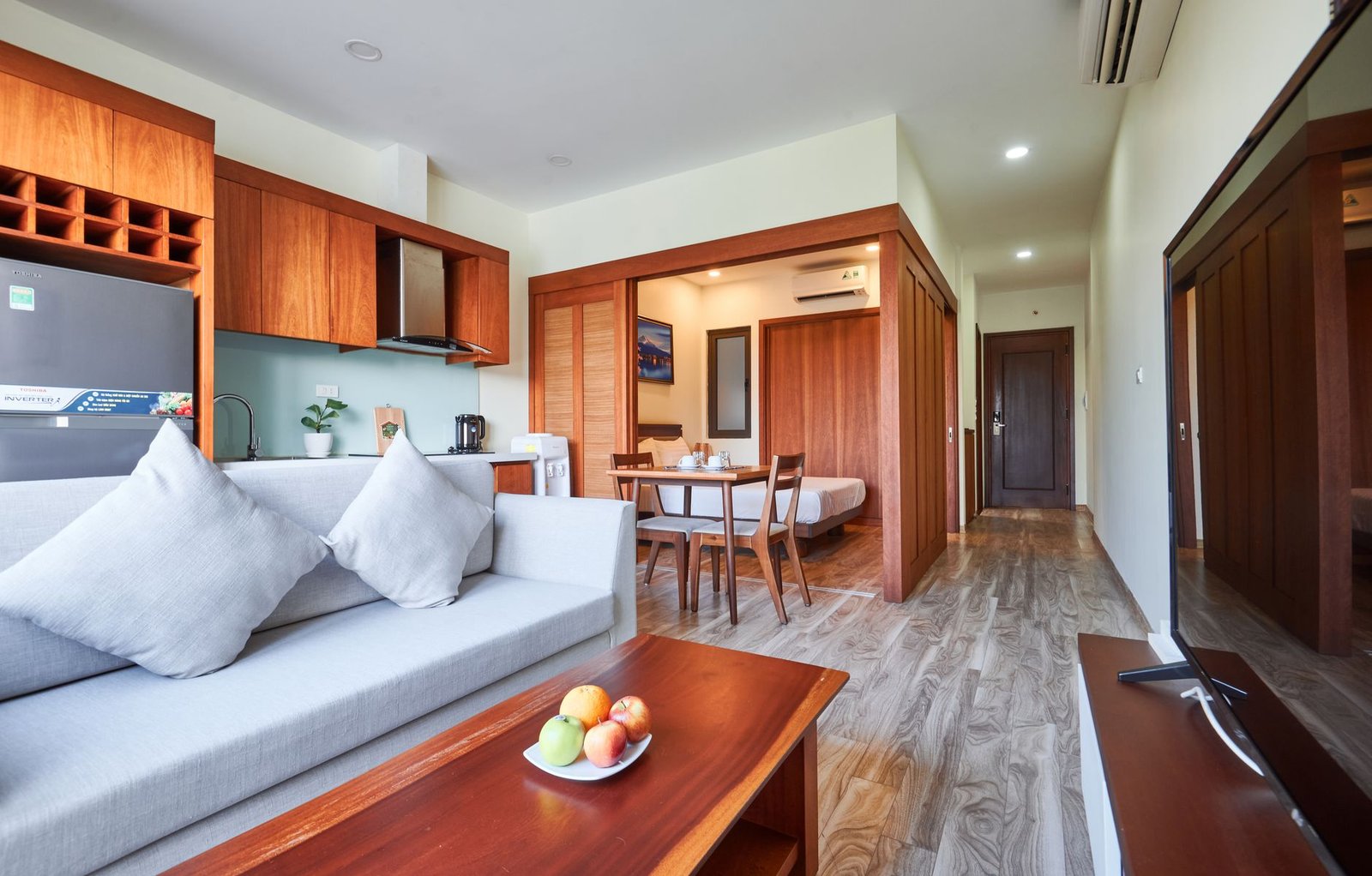
The Post-Polish Home: Why Imperfect Is the New Goal
I cleaned my whole apartment last weekend. Like properly cleaned it. Everything put away, surfaces clear, pillows doing that karate chop thing. And I stood in the middle of my living room, looked around, and felt… nothing. Not proud. Not calm. Just kind of flat.
It took me a minute to figure out why. It’s because it looked like a photo of an apartment. Not like mine.
Nothing on the counters. No book face-down on the arm of the couch where I left off. No evidence that anybody had laughed in there, or cried in there, or eaten cereal standing up over the sink in there. I’d cleaned my life right out of my own home.
And that’s when it hit me — I wasn’t cleaning. I was staging.
So what is a “post-polish” home?
If you’ve been anywhere near design content lately, you’ve probably felt the shift. We’re coming out of a solid decade of the perfect home. You know the one. Everything white or greige. Everything matching. Everything from the same three stores. Open shelving styled with exactly four objects, none of which you’re allowed to touch.
The move now is toward what designers are calling imperfect interiors — and honestly, it’s one of the few trends I’ve been genuinely happy to see.
There’s a Japanese idea that keeps coming up in all of this, wabi-sabi, and one designer described it as an appreciation for the imperfect, the weathered, and the incomplete. Which — read that again. The incomplete. Not the half-done-and-embarrassing. The still-becoming.
There’s another version of it people are calling the collector’s home: a space that built itself up over time instead of arriving all at once. Art hung slightly off-center. Books stacked crooked. Objects you kept because you loved them, not because they matched a palette someone put on a mood board.
In practice it looks like unlacquered brass that’s allowed to go dark where your hands touch it. Wood with actual scratches. Handmade tiles with little chips in them. Furniture that’s gone soft from being sat in. Real stuff, that shows it’s been real for a while.
What’s on the way out is the showroom look. The cold, flawless, don’t-touch-anything version of a home that’s built to be admired instead of lived in.
Why we all did this to ourselves
Here’s the part nobody says out loud: the perfect home thing was never really about homes.
We spent years scrolling through other people’s living rooms. Not real living rooms — photographed ones, shot in the ten minutes after somebody hid all their laundry. And slowly, without deciding to, a lot of us started treating our own homes like something that might get looked at. Something that had to hold up.
I’m currently working on transforming my office space to be an actual office besides my creative studio/storage unit/cat bathroom. Although that room is honestly a mess I still love the idea of what is going to be. That room is slowly getting put together by throwing things away and having more room for me. I am done striving for my dream office. My new dream off is going to have 5 stations for my crazy projects and fun like recording my YouTube videos someday, my podcast station, my diamond painting station and so on.
And the exhausting thing about decorating for an imaginary audience is that they’re never satisfied, because they don’t exist. You can’t win. There’s always a better version of your own shelf on someone else’s feed.
Your home is not a portfolio
I think this is the reframe that actually changed it for me.
Your home isn’t a body of work. Nobody is grading it. It’s not a before-and-after, it’s not content, it’s not proof that you’ve got your life together. It’s the place where your life physically happens.
And the things that make it look “unfinished” are usually just… evidence of that life. The candle burned down unevenly because you actually lit it. The throw blanket is bunched because someone slept under it. There’s a water ring on the wood because a person set a glass down without thinking, and that person was happy, and nobody was measuring.
A home that’s been lived in has fingerprints. And we’ve somehow decided fingerprints are a flaw.
What changes when you let it be lived-in
The thing I didn’t expect: my apartment got more comfortable to be in, but so did I.
Because it turns out the same voice that says your coffee table needs to look better before anyone sees it is the same voice that says you need to look better before anyone sees you. Same voice. Same standard. Same impossible audience.
There are parts in my house that are too perfect and I look at like it now like, ok this needs to be a new perfect but my kind of perfect. Not the perfect that I see on social media, but the type of perfect that makes sense to me. As I remodel my home office, I am working on remodeling my bedroom and the living room.
Letting my space be imperfect was practice. Small, low-stakes practice for a much bigger thing: letting me be imperfect and still be worth something.
The permission slip
So if you’re standing in your own living room feeling like it isn’t “done” yet, I want to offer you this:
It’s not supposed to be done. Done is a showroom. Done is a photo. You’re going for something better than done — you’re going for yours.
Let the brass darken. Let the books stack crooked. Let the blanket stay where somebody left it. Buy the ugly thing you love instead of the beautiful thing you don’t.
Your home should look like somebody lives there.
Let it be you.